Atlas · itinéraires
Itinéraires et niveaux de certitude
Les déplacements sont décomposés en segments dont le statut de preuve est explicite : texte, géographie narrative, reconstruction, contexte ou hypothèse.
Règle. Une ligne sur une carte n’équivaut jamais à une certitude historique. Un segment peut être textuellement attesté sans que son tracé exact soit connu.
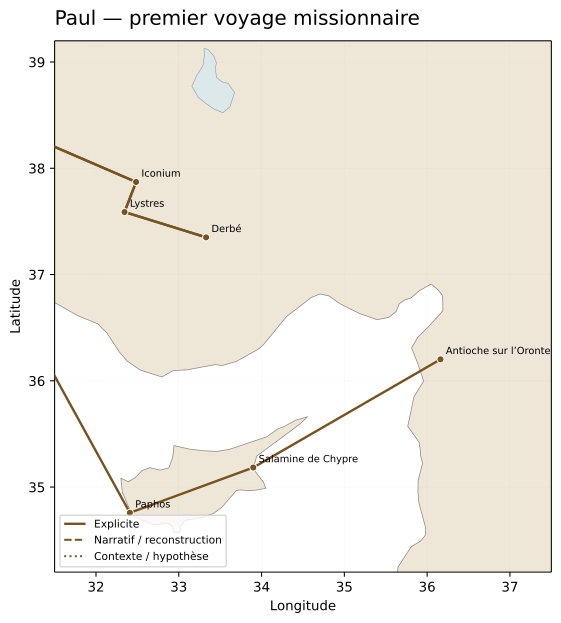
Paul — premier voyage missionnaire
Période : vers 46–48 apr. J.-C. · Nature : textuel
| Départ | Arrivée | Statut | Source | Précision |
|---|---|---|---|---|
| antioche-oronte | salamine-chypre | Explicite | Ac 13,4–5 | |
| salamine-chypre | paphos | Explicite | Ac 13,6 | |
| paphos | perge | Explicite | Ac 13,13 | |
| perge | antioche-pisidie | Explicite | Ac 13,14 | |
| antioche-pisidie | iconium | Explicite | Ac 13,51 | |
| iconium | lystre | Explicite | Ac 14,6 | |
| lystre | derbe | Explicite | Ac 14,20 | |
| derbe | lystre | Explicite | Ac 14,21 | |
| lystre | iconium | Explicite | Ac 14,21 | |
| iconium | antioche-pisidie | Explicite | Ac 14,21 |
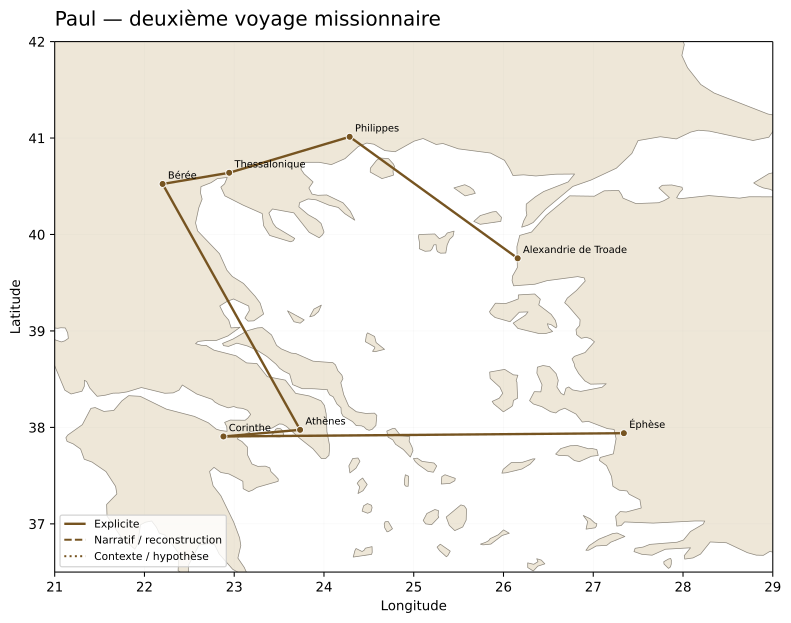
Paul — deuxième voyage missionnaire
Période : vers 49–52 apr. J.-C. · Nature : textuel
| Départ | Arrivée | Statut | Source | Précision |
|---|---|---|---|---|
| troas | philippes | Explicite | Ac 16,11–12 | |
| philippes | thessalonique | Explicite | Ac 17,1 | |
| thessalonique | beree | Explicite | Ac 17,10 | |
| beree | athenes | Explicite | Ac 17,14–15 | |
| athenes | corinthe | Explicite | Ac 18,1 | |
| corinthe | ephese | Explicite | Ac 18,18–19 |
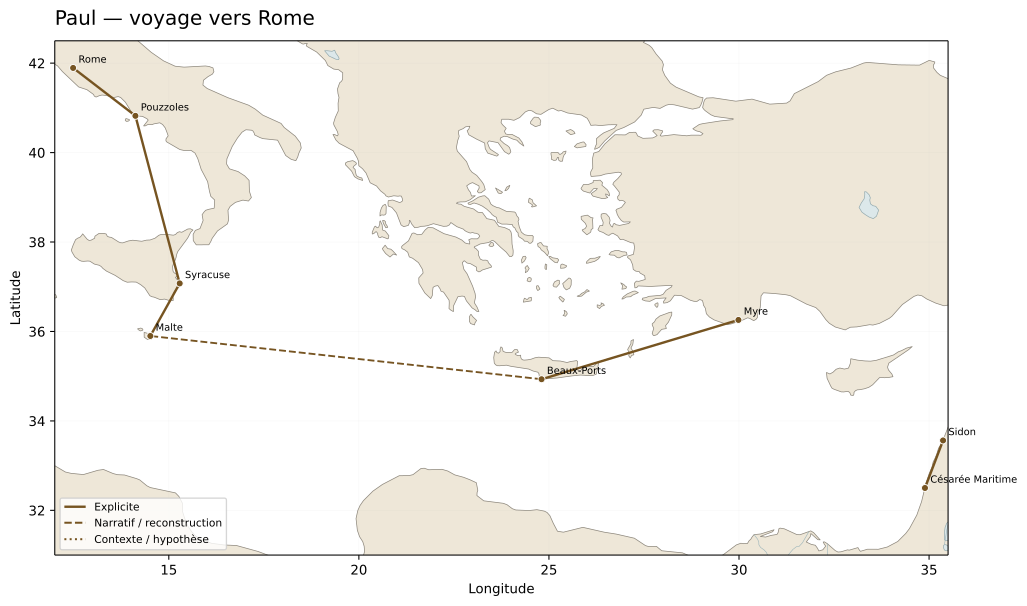
Paul — voyage vers Rome
Période : vers 59–60 apr. J.-C. · Nature : textuel
| Départ | Arrivée | Statut | Source | Précision |
|---|---|---|---|---|
| cesaree-maritime | sidon | Explicite | Ac 27,3 | |
| myra | beaux-ports | Explicite | Ac 27,5–8 | |
| beaux-ports | malte | Reconstruction | Ac 27,12–44 | Le naufrage est narré, mais la trajectoire maritime exacte reste reconstruite. |
| malte | syracuse | Explicite | Ac 28,11–12 | |
| syracuse | puteoli | Explicite | Ac 28,13 | |
| puteoli | rome | Explicite | Ac 28,14–16 |
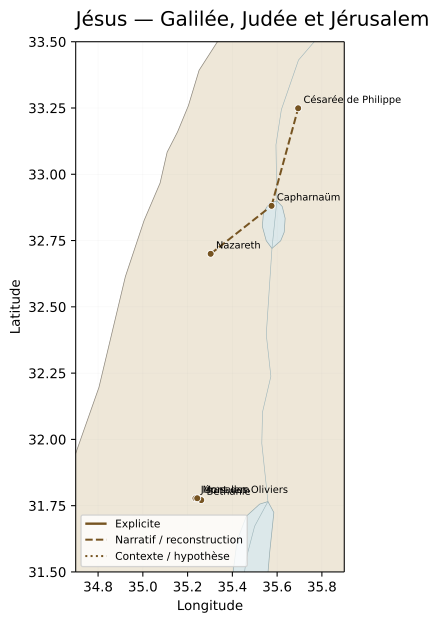
Jésus — Galilée, Judée et Jérusalem
Période : Ier siècle apr. J.-C. · Nature : narratif
| Départ | Arrivée | Statut | Source | Précision |
|---|---|---|---|---|
| nazareth | capharnaum | Narratif | Mt 4,13; Lc 4,31 | Le déplacement est textuellement associé au ministère galiléen ; l’itinéraire précis n’est pas décrit. |
| capharnaum | cesaree-philippe | Narratif | Mt 16,13; Mc 8,27 | |
| bethanie | jerusalem | Explicite | Mc 11,1.11 | |
| jerusalem | mont-oliviers | Explicite | Mc 13,3; Lc 21,37 |
Patriarches — géographie narrative
Période : récits de Genèse · Nature : narratif
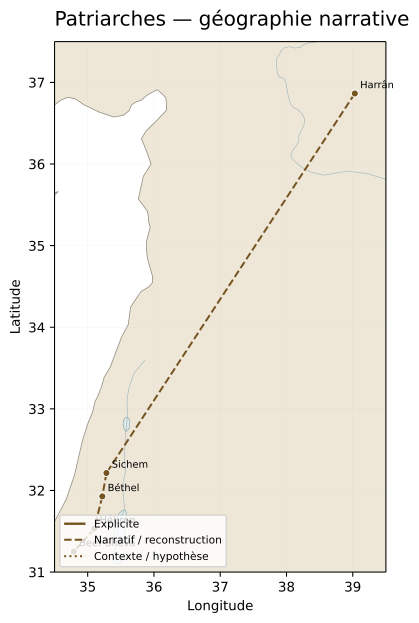
| Départ | Arrivée | Statut | Source | Précision |
|---|---|---|---|---|
| harran | sichem | Narratif | Gn 12,4–6 | |
| sichem | bethel | Narratif | Gn 12,8 | |
| bethel | hebron | Narratif | Gn 13,18 | |
| hebron | beer-sheva | Narratif | Gn 21–22 | Les récits associent ces lieux sans fournir un tracé routier continu. |
Exode — points, étapes et hypothèses
Période : géographie narrative de l’Exode · Nature : hypothetique
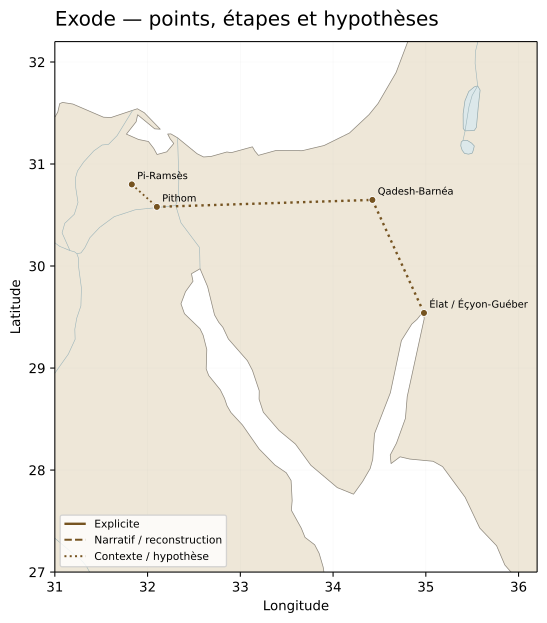
| Départ | Arrivée | Statut | Source | Précision |
|---|---|---|---|---|
| pi-ramses | pithom | Contexte | Ex 1,11 | Même cadre égyptien ; ce segment n’est pas un itinéraire biblique explicitement donné. |
| pithom | kadesh-barnea | Hypothétique | Ex–Nb | Les stations intermédiaires sont nombreuses et plusieurs restent non identifiées. |
| kadesh-barnea | eilat-ezion | Hypothétique | Nb 20–21 | Relation régionale indicative, non tracé démontré. |
Passerelles
Pour situer, approfondir ou revenir au texte.